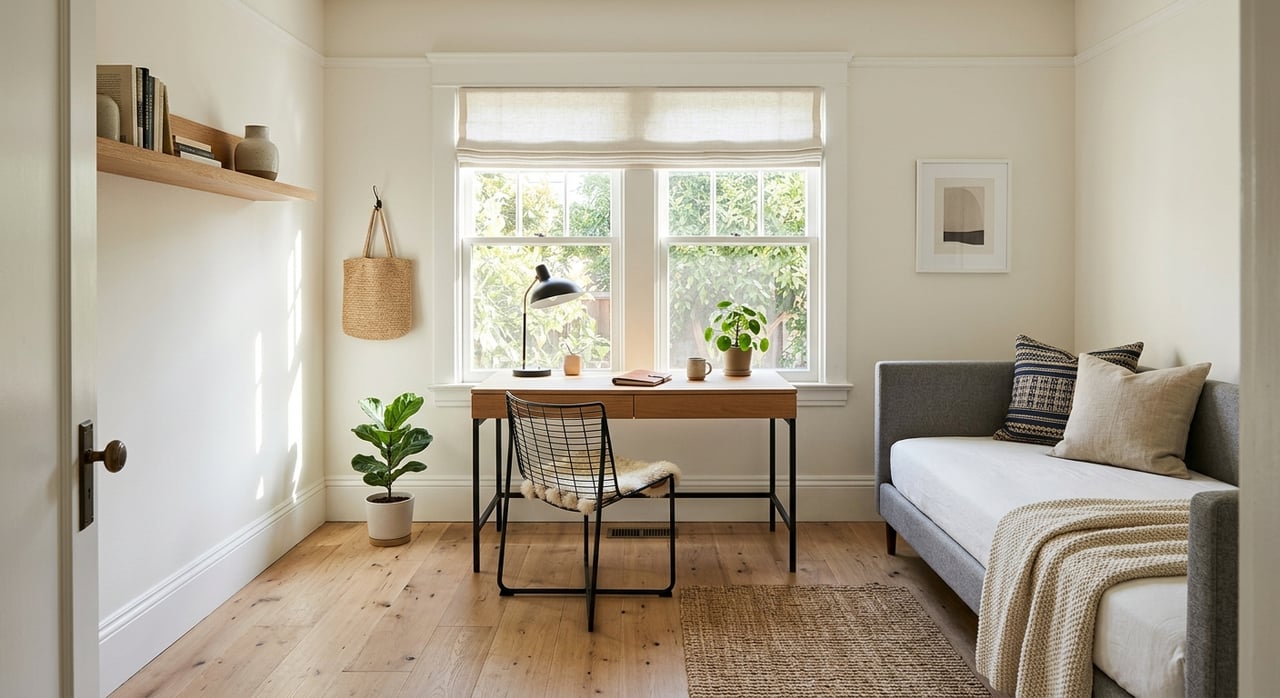
Wondering whether a home office is still a must-have in Amesbury? For many buyers, the answer is yes, but not always in the way you might think. Today’s buyers often want a space that supports work, video calls, paperwork, hobbies, or overnight guests without wasting square footage, and that makes smart flex rooms especially appealing. If you are buying or selling in Amesbury, understanding what buyers expect can help you spot value, market a home more effectively, and make better decisions. Let’s dive in.
Why home office space still matters
Work-from-home demand did not disappear. The U.S. Census Bureau reported that 13.8% of workers usually worked from home in 2023, up from 5.7% in 2019, and the Bureau of Labor Statistics reported a 20.8% telework rate for private-industry workers in April 2025. That helps explain why many buyers still notice whether a home has a purposeful place to work.
In Amesbury, that need can feel even more relevant. The city’s 2023 ACS profile shows a median household income of $100,599, and 42.5% of adults have a bachelor’s degree or higher. While every household is different, those numbers point to a buyer pool that often values functionality, daily efficiency, and rooms that can support changing routines.
What Amesbury buyers expect now
A dedicated office is still attractive, but buyers are not always demanding a large extra room. Research from NAHB suggests many buyers want space for at least one in-home office, yet some are willing to trade down on total square footage if the price is right and the room mix works. In other words, buyers often care more about usable layout than sheer size.
That is especially important in Amesbury, where buyers may be balancing remote work with commuting options. The City of Amesbury notes that the city sits at the junction of I-95 and I-495, and the Newburyport MBTA commuter rail station provides access through the North Shore and into Boston. For some buyers, that means a home office does not need to replace a commute every day, but it does need to support a hybrid routine with comfort and consistency.
Flex rooms often win attention
A flex room can be more appealing than a poorly defined office. Buyers are often open to a room that works as an office, guest room, reading space, or bonus room, as long as the purpose is obvious when they walk in. When a room feels like part office, part storage, and part gym all at once, it can create confusion instead of value.
That flexible mindset fits Amesbury well. The city describes a revitalized downtown with old mill buildings that now house residences, offices, and artist studios. In a market with that kind of live-work character, a room that feels adaptable and intentional can make a strong impression.
Clear function matters most
The biggest expectation is not necessarily a separate office with double doors. It is clarity. Buyers want to understand how a room fits into daily life without having to guess.
A small bedroom, finished corner, or landing nook can work if it is presented well. If the room looks deliberate and easy to use, many buyers will see the potential. If it looks temporary or cluttered, they may move on mentally, even if the square footage is there.
Features buyers notice in office and flex spaces
Buyers tend to respond to rooms that feel practical, calm, and easy to personalize. You do not need a luxury build-out to create that effect. You do need the room to feel usable from day one.
Here are the features that usually help a home office or flex room land better with buyers:
- A clear desk area with enough room to work comfortably
- A comfortable chair and simple task lighting
- Minimal accessories so the room feels open, not crowded
- Clean horizontal surfaces with limited visual clutter
- Closets and storage areas that do not appear overfilled
- Neutral paint or a fresh coat of paint if the room feels tired
- A simple layout that supports one primary use first
These details may sound small, but they shape how buyers read the room. According to NAR, staging helps buyers better see a home as their own, and 83% of buyers’ agents say staging has that effect.
What sellers should avoid
If you are selling, one of the biggest mistakes is trying to show too many uses at once. A room with a desk, workout bench, stacked bins, and full guest setup can feel more chaotic than flexible. Buyers usually respond better when one main purpose leads the presentation.
Another issue is labeling a room more specifically than it looks. If it does not clearly function as an office or guest room, it may be better to present it as a flex room or bonus space. The goal is to match the name to the visual experience.
Mixed-use clutter can hurt perception
NAR guidance points to a common problem with mixed-use rooms: when the space reads as part office, part storage, and part something else, buyers can disconnect from it. They may start focusing on compromise instead of opportunity. That shift matters during showings and online browsing.
A better approach is to keep the room simple and intentional. Let buyers imagine how they would adapt it, rather than forcing every possible use into one small space.
How to stage a flex room in Amesbury
You do not need a major renovation to improve buyer perception. In many cases, a few low-cost updates can make the room feel more finished and more relevant to today’s buyer.
Start with the basics:
- Place one desk in the room instead of multiple furniture pieces
- Use a comfortable but compact chair
- Add simple task lighting
- Remove excess decor and personal items
- Keep shelves and surfaces lightly styled
- Organize closets so storage looks functional
- Refresh walls with a neutral paint color if needed
If the room also needs to serve as a guest room, keep the bedding sparse and the workspace tidy. That helps the room still read as a deliberate flex space instead of a room that never found its purpose.
Why layout can matter more than size
Many buyers are making tradeoffs. They may accept a smaller home if the layout supports how they actually live and work. That means a smartly positioned office nook, finished bonus room, or secondary bedroom with clean presentation can carry real weight.
For Amesbury sellers, this is a useful takeaway. You do not always need to apologize for a smaller room. Instead, show how the space supports work-from-home routines without giving up guest space or everyday function.
The local commute story matters
Amesbury offers a mix of accessibility and lifestyle that shapes buyer expectations. With I-95, I-495, MBTA commuter rail access via Newburyport, and MVRTA bus service listed by the city, many buyers may be blending office time, remote days, and regional travel. That makes versatile room use more relevant than a one-size-fits-all office setup.
In practical terms, buyers may be looking for a home that helps them shift easily between workdays at home and days on the go. A flex room that supports that rhythm can feel more valuable than a formal room used only occasionally.
What buyers should look for
If you are buying in Amesbury, try to look beyond the label on the listing. A room does not have to be called an office to function well as one. Focus on whether the space has enough separation, light, and layout to support your real routine.
As you tour homes, ask yourself:
- Can you picture a defined workspace here?
- Does the room feel quiet enough for calls or focused work?
- Is there enough wall or floor space for a desk setup?
- Could the room still serve another purpose when needed?
- Does the home’s layout support your work and commute routine?
If internet access is part of your decision, be specific about how you verify it. The FCC says the National Broadband Map shows providers, technologies, and maximum advertised speeds available at an address, but it does not measure actual performance or affordability.
What this means for Amesbury sellers
The strongest listing strategy is usually not just saying a home has an office. It is showing how that space works in real life. Buyers want to see a room that supports productivity, comfort, and flexibility without feeling crowded or overdesigned.
That is where thoughtful preparation and strong marketing can make a difference. A well-staged flex room, paired with sharp photography and clear positioning, can help buyers quickly understand the value of the layout. In a market like Amesbury, that clarity can help your home stand out.
If you are thinking about selling and want to know how buyers will read your layout, The Barnes Team can help you position your space with a local, data-driven strategy that fits today’s market.
FAQs
What do Amesbury buyers want in a home office?
- Many Amesbury buyers want a clear, usable workspace that supports remote or hybrid work, even if it is not a large dedicated office.
Does a home in Amesbury need a dedicated office to appeal to buyers?
- No. Buyers are often open to a nook, spare bedroom, or flex room as long as the function is obvious and the space feels intentional.
How should sellers describe a flex room in an Amesbury listing?
- Sellers should describe the room based on how it is actually presented. If it does not clearly read as an office or guest room, calling it a flex room or bonus space is usually more accurate.
What staging changes help a home office stand out to Amesbury buyers?
- A simple desk, comfortable chair, task lighting, neutral paint, and reduced clutter can help the room feel purposeful and easy for buyers to picture using.
How can Amesbury buyers verify internet options at a property?
- Buyers can use the FCC National Broadband Map to check providers, technologies, and maximum advertised speeds at an address, while keeping in mind that the map does not measure actual performance or affordability.