Pull up any portal and Amesbury looks like a single market. In June 2026, homes sold for a median price of $647,450, with properties moving in 15 days on average compared to 28 days a year earlier. Zillow's index tells a nearly identical story: the average Amesbury home value is $634,683, up 2.1% over the past year, with homes going to pending in around 8 days.
Both figures are accurate. Both are also misleading if you are trying to decide whether to write an offer on a mill loft downtown, a 1988 townhome off Route 110, or a Federal on Point Shore. A single citywide median averages four housing-stock eras into one number that describes no home you can actually buy.
The dispersion the median hides
The clearest signal that the median is masking something is the raw spread of what trades inside Amesbury's one ZIP code. Within 01913, homes for sale range from a median value of roughly $185,325 at the low end to about $1,996,254 at the top, and recently sold homes range from roughly $143,086 to $1,516,486. That is not one market with some outliers. That is at least four different products competing under the same city line.
The compression in days on market makes the dispersion more consequential, not less. When the typical listing goes pending in two weeks, the buyer who understands which submarket they are actually shopping is the one who writes a credible offer on the first tour. The buyer working from the citywide median tends to be a round late.
Four submarkets, four housing eras
Amesbury's housing stock tells the history of the city in layers. The 18th and 19th centuries built the riverfront estates. The mill boom of the 1800s left the brick shells that now house lofts. The mid-century summer-cottage era shaped the lake-adjacent pockets. And the 2020s are still adding new construction off Route 110. Each layer trades on its own logic.
Point Shore
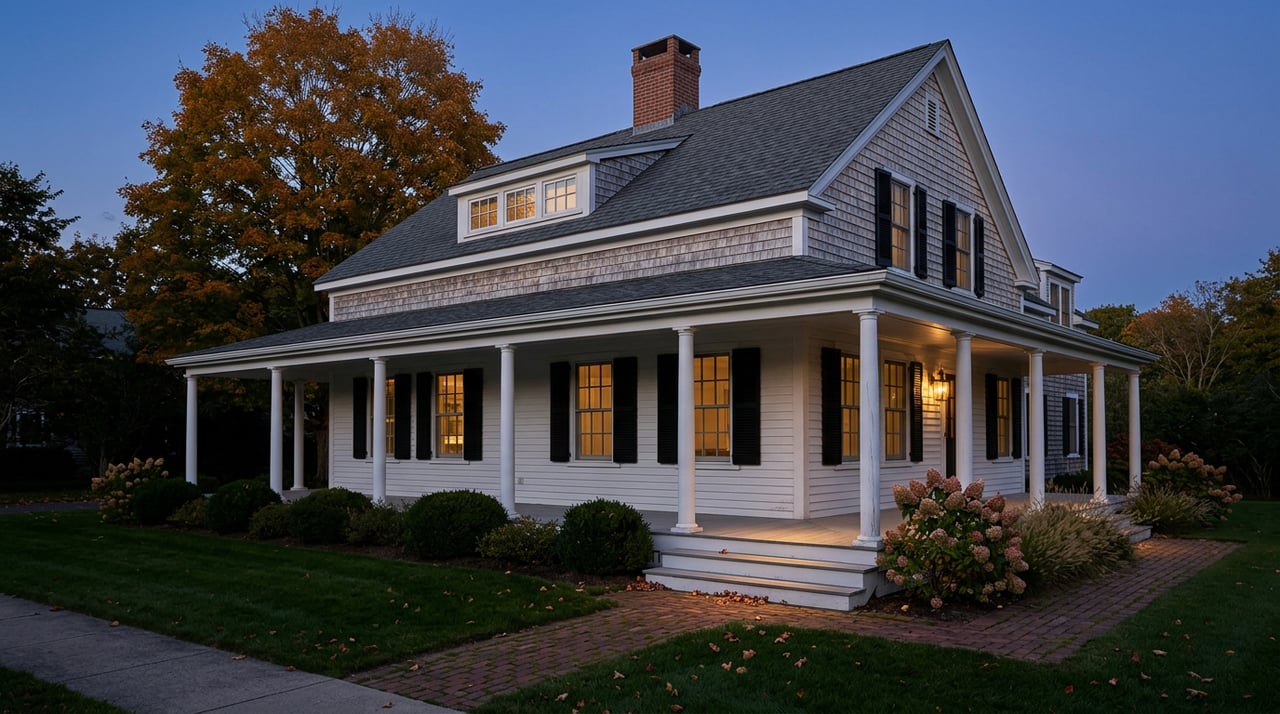
Stretching along the banks of the Merrimack River, Point Shore is defined by 18th and 19th-century Federal and Greek Revival estates alongside converted carriage houses and luxury townhome developments, with many properties featuring expansive lawns leading directly to the water and private docks with unobstructed views toward the Atlantic. The state's own landscape inventory identifies Point Shore and the adjacent Ferry District as among Amesbury's oldest and best preserved neighborhoods, whose desirable location along the Merrimack River also makes them particularly vulnerable to change.
The friction here is not price alone. It is availability. Turnover on the truly waterfront parcels is thin enough that the citywide median tells you almost nothing about what a Federal with dock rights will actually cost when one appears. A buyer targeting Point Shore should expect to underwrite two homes for every one they see listed, because comparable sales inside the neighborhood are sparse and older than the market cycle you are pricing into.
The Millyard and downtown mill conversions
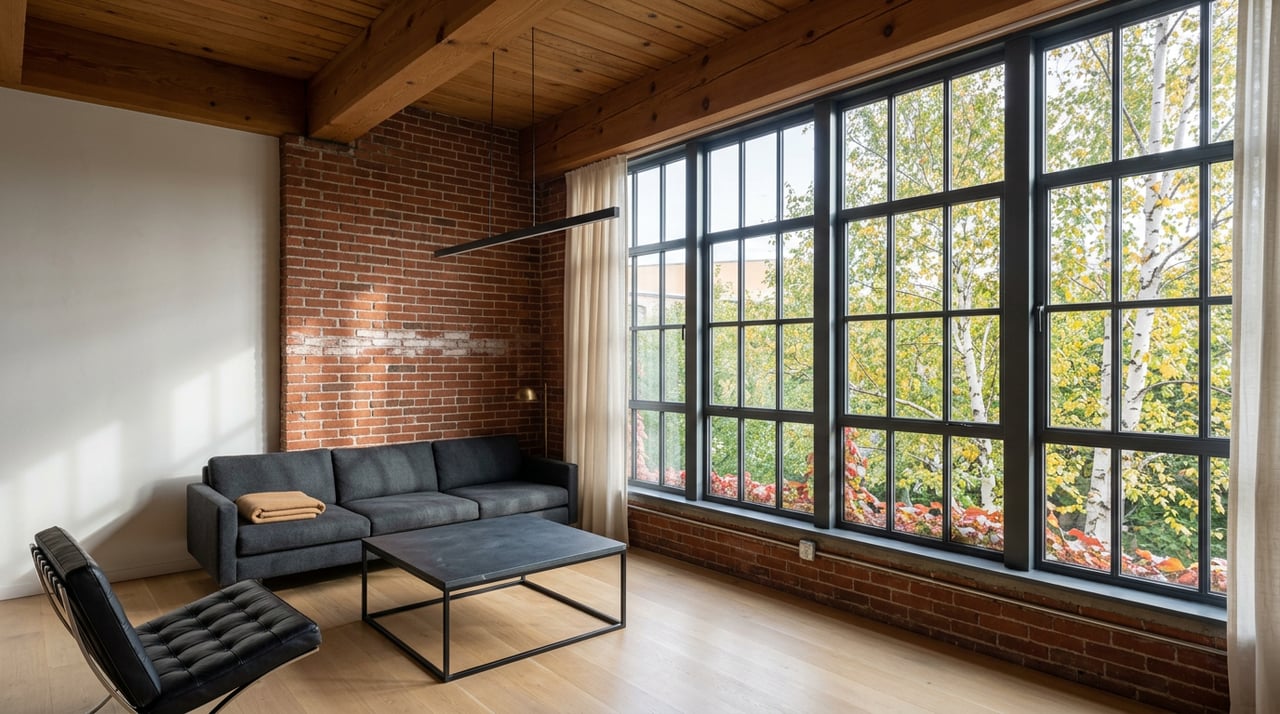
The downtown story is a different product entirely. The downtown and Millyard area feature Victorian homes, converted mill lofts, and a community scene along the Powwow River, with walkable access to cafes, breweries, galleries, and parks. Two named conversions anchor the segment.
Hatter's Point sits at the high end of the mill-conversion category. The community is 88 units, built 1903 / 2018. Construction began in 2004, with single-level homes ranging from 1,545 to 1,949 square feet with one or two bedrooms, a den, and a one-car garage, while penthouse homes range from 1,925 to 2,364 square feet with two-car garages. It is also a 55+ condominium community with balconies facing the Merrimack River and a 135-slip marina.
Carriage Lofts, by contrast, was built in 2004 with 49 units and sits in the downtown fabric rather than on the water. A mill-loft buyer is buying square footage, ceiling height, and walkability, not land. That trade shows up in resale: mill conversions in a rising market tend to trail single-family appreciation because the underlying asset is a share of a building, not a lot.
Lake Gardner and Lake Attitash
The lake-adjacent pockets are the most heterogeneous of the four submarkets. Lake Attitash homes range from year-round residences to properties that started as summer cottages and have been upgraded over time, and neighborhood association membership grants private beach access. Lake Gardner works differently: it has a sandy public beach with trails running along the shoreline.
The pricing implication is that two homes half a mile apart can trade at very different numbers depending on whether they carry private association rights, whether the structure is a converted cottage or a full year-round build, and whether the lot has direct frontage. A buyer working from the citywide median has no way to price any of that. A buyer who has read the association bylaws does.
The Route 110 corridor and new construction
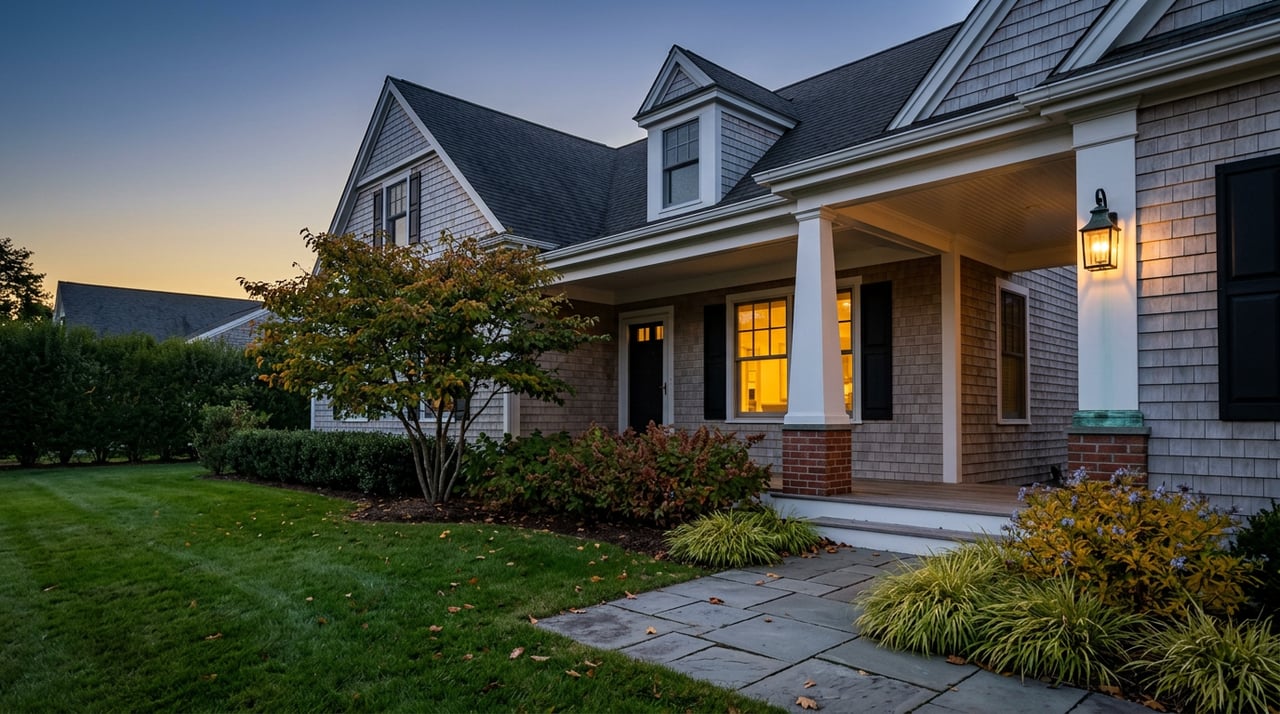
The newest inventory sits along Route 110 and in the pockets developers have been able to entitle. The Route 110 corridor, Carriagetown, and South Amesbury provide newer subdivisions with contemporary single-family residences.
Two condominium and townhome developments show how far the new-construction segment now sits above the citywide median. Bartlett's Reach is the older of the two, a 64-unit development built in 1988, sitting on 100 acres along the Merrimack with a clubhouse, pool, and tennis. The Village at Bailey's Pond is the current-cycle project. Developed by Brendon Properties, it is a maintenance-free townhome community offering three-bedroom floor plan styles. The pricing is public: homes range from $888,859 to $924,900 with 2,222 to 2,551 square feet.
That last number is the one that reframes the whole discussion. A new three-bedroom townhome in Amesbury is trading roughly 35 to 40 percent above the citywide median. A mill loft is often trading well below it. The "median" home is a statistical composite that essentially nobody buys.
The comparison in one view
| Submarket | Dominant era | Typical product | What the price is really paying for |
|---|---|---|---|
| Point Shore | Late 18th to 19th c. | Federal / Greek Revival on the Merrimack | Land, frontage, scarcity |
| Millyard / downtown | 1900s mill shells, converted 2004–2018 | Loft condos (Hatter's Point, Carriage Lofts) | Ceiling height, walkability, HOA-managed exterior |
| Lake Gardner / Lake Attitash | Mid-century cottages, upgraded | Year-round homes, some with association rights | Water access, association bylaws, seasonal-to-year-round conversion quality |
| Route 110 / Bailey's Pond | 1988–present | Townhomes, new construction | Maintenance-free structure, warranty, no deferred capex |
Where the transaction friction lives
Once you can name the four submarkets, the negotiation questions change.
On Point Shore, the friction is comp scarcity and, in some cases, private off-market activity. Point Shore properties rarely hit the market, and buyers set on the neighborhood should be prepared to act fast and possibly work with an agent who has relationships with current owners. Pricing an offer against three-year-old comps in a rising market requires an appraisal strategy, not just a bid strategy.
On mill conversions, the friction is the condominium documents. Hatter's Point in particular is a 55+ community, which is a legally defined age-restricted structure with implications for resale pool and financing. Any mill loft buyer should be reading budget reserves, master insurance, and any pending special assessments before writing.
On the lakes, the friction is the association layer. Association beach rights transfer with some homes and not others, and a title search that treats them as a footnote will cost the buyer on the day the neighbors clarify the rules. This is the submarket where a walk-through with someone who has closed on the specific street is worth more than any portal comp.
On new construction, the friction is the premium itself. The Village at Bailey's Pond delivers a finished, warrantied product at a price that reflects that. The tradeoff is that new construction rarely bids up further on resale in the way a well-restored antique can, so a buyer paying the new-construction premium should be doing so for the maintenance profile, not the appreciation story.
A short FAQ
If the citywide median is $647,450, what does that actually buy? In practice, a mid-market Amesbury budget buys either a single-family home away from the water in an established residential pocket, or a well-appointed condominium in a converted mill. It generally does not buy Point Shore frontage, and it sits below the current price band at The Village at Bailey's Pond.
Which submarket has the tightest inventory right now? Point Shore, structurally. The neighborhood's protected status and low turnover mean supply does not respond to demand the way it does along Route 110. Days-on-market averages for the city as a whole hide this because most closings are happening elsewhere.
Is a mill conversion a good long-term hold? It depends on why you are buying. Mill lofts hold value well in walkable-downtown demand cycles and offer a maintenance profile that owners of antique single-families do not get. They tend to appreciate more slowly than land-heavy single-families in the same market. Both can be right answers for different buyers.
Does the new-construction premium at Bailey's Pond make sense? For a buyer who wants no deferred maintenance, three bedrooms, and a warranty, yes. For a buyer optimizing for appreciation per dollar, the older stock in the same city usually wins over a ten-year hold.
Amesbury rewards buyers who stop shopping the median and start shopping the submarket. If you want a read on which of the four fits your budget, your timeline, and your maintenance appetite, The Barnes Team works these streets weekly and can price the tradeoffs against your actual shortlist. Get your instant home valuation to anchor the conversation in real numbers before your first tour.