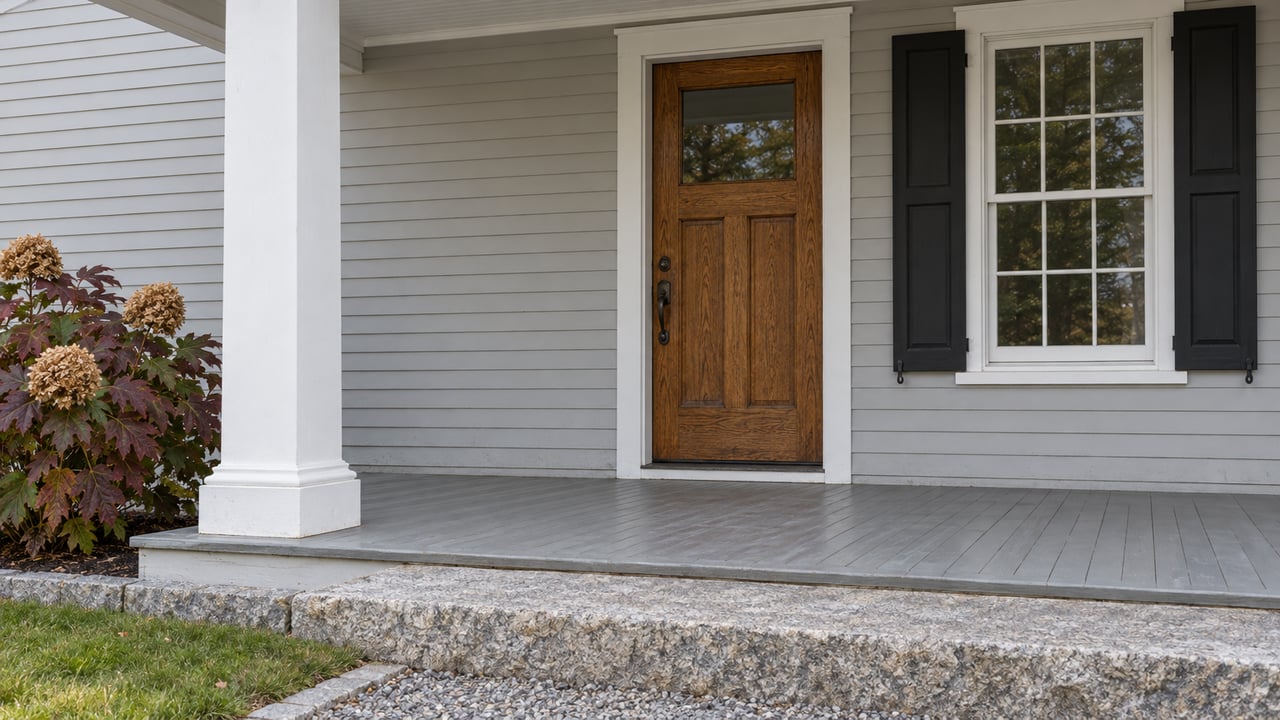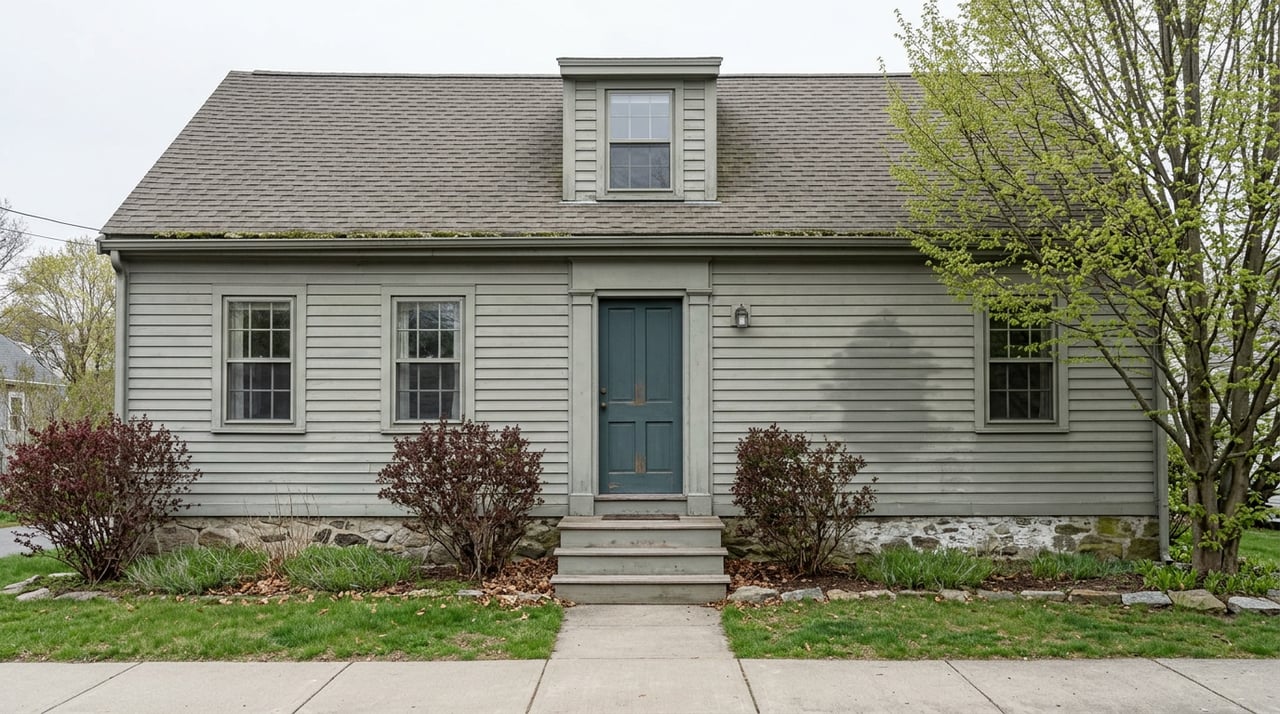
Two buyers make the same move this month in Amesbury. Both are up against multiple offers. Both decide the only way to compete is to drop the inspection contingency and let the deal close on the seller's terms. One is buying a colonial finished in 2005. The other is buying a cape built for a mill worker's family sometime before 1940. On paper, they made the identical concession. In practice, they took on very different amounts of risk, and only one of them will find that out before the closing costs are already spent.
That gap is the thing worth understanding before you write an offer here, whether you're the one waiving the contingency or the one hoping a buyer will.
The market is rewarding speed, not caution
Amesbury's housing market has not slowed down enough this year to make careful due diligence the path of least resistance. As of a market update in late May 2026, the average home value in the city sat at $634,683, up 2.1% over the past year, with homes moving to pending in around eight days. Zoom out to the broader Amesbury Town market and the three months ending in June 2026 put the median sale price at $644,649, up 5.7% year over year, in a market scored 90 out of 100 for competitiveness. Multiple offers are common, and so are waived contingencies.
None of that is unusual for the region right now. What's easy to miss is that "waived contingencies" gets treated as one uniform strategy, applied the same way regardless of what's actually behind the walls. A house is a house, the thinking goes, and speed wins. But speed only works in your favor if you already know roughly what you're skipping past.
A meaningful share of Amesbury's homes predate the guardrails
Recent five-year Census estimates put the median year a home was built in Amesbury Town at 1969, and depending on which dataset you check, somewhere between roughly 35 and 38 percent of the city's housing units went up before 1940. That's not a rounding error. It's the mill-era core of the city: the capes and multi-families built when Amesbury was still a carriage manufacturing town, decades before three-pronged outlets, copper supply lines, or any of the systems a 2005 colonial takes for granted.
That older third to two-fifths of the market is exactly where a waived inspection stops being a clever competitive move and starts being a bet you can't fully price.
What actually turns up in a house that age
Home inspectors who work in older New England housing stock report a fairly consistent list of findings once a house crosses that pre-1940 threshold. None of it is exotic. All of it costs real money to fix.
| What shows up | Typical age of the home | What it tends to mean |
|---|---|---|
| Knob-and-tube wiring | Installed roughly from the 1880s through the 1940s | Considered obsolete and unsafe today; rewiring can run from several hundred dollars to tens of thousands, depending on the scope and size of the house |
| Buried oil tank | Common where the home was heated with an early or mid-century oil system | If it's leaked, testing and removal can climb into the tens of thousands of dollars |
| Galvanized supply pipe | Common in plumbing installed before the 1960s | Corrodes from the inside, restricting water pressure over time, often ending in a full repipe |
Any one of these can be manageable on its own. The problem is that a house old enough to have one of them is often old enough to have two or three, and a waived inspection means you find out which combination you bought after you already own it.
The inspection you skip might not have caught the worst one anyway
Here's the detail that changes the calculation. Even if you keep your inspection contingency, Massachusetts doesn't require a home inspector to check for a buried oil tank as part of a standard inspection. Clayton Home Inspection, a long-running Amesbury-area inspection practice run by Thomas Herbst, notes plainly that oil tank checks aren't mandated by the state and are only included because the inspector chooses to include them. That means the single most expensive failure mode on this list is also the one you have to specifically ask about. A buyer who assumes a standard inspection covers everything can still miss it, contingency intact.
The same logic applies once repairs start. Amesbury's own Inspectional Services page is explicit that homeowners cannot pull their own electrical, plumbing, or gas permits. That work has to go through a Massachusetts-licensed electrician, plumber, or gasfitter, under the authority of state wiring law (MGL c. 143, s. 3L) and plumbing and gas law (MGL c. 142, s. 13). If a buyer discovers knob-and-tube after closing, fixing it isn't a weekend project for a handy new owner. It's a licensed job, priced accordingly, on top of whatever the buyer already paid to win the house.
Homes inside one of Amesbury's historic districts carry one more layer. Exterior changes there may also need to clear the city's Design Review Committee, an active municipal body that reviews such changes as they come up. None of this is disqualifying. It just means the timeline and the paperwork stack up differently than they do on a newer build across town.
What this means depending on which side of the table you're on
If you're buying. Waiving the inspection contingency to compete is a real strategy, and in this market it sometimes works. But treat the year the house was built as a variable in that decision, not a footnote. If the listing is pre-1940, ask directly whether the inspector checked for an oil tank, and budget as if the wiring hasn't been touched since the Truman administration until you can prove otherwise.
If you're selling. An older Amesbury home doesn't need to scare off buyers, but a pre-listing inspection or a documented electrical and heating history removes the biggest source of last-minute renegotiation. Buyers who are willing to waive contingencies to win a house are still going to ask questions if the seller can't say when the wiring or the tank was last checked. A little documentation up front tends to keep the deal moving instead of stalling it two weeks before closing.
A short FAQ
What should buyers know about knob-and-tube wiring? It's widely considered obsolete and unsafe by inspectors and electricians, and it's incompatible with modern three-pronged appliances. Replacing it requires a Massachusetts-licensed electrician working under state wiring law.
Does Massachusetts require an oil tank inspection when a house sells? No. A standard home inspection in Massachusetts doesn't mandate a check of a buried oil tank. Some inspectors include it as a matter of practice, but buyers of older homes should confirm that directly rather than assume it's covered.
If you're weighing whether to waive a contingency on an older Amesbury property, or you're getting one ready to list, The Barnes Team can walk through what a specific house's age and systems actually mean for your timeline. Sellers can start with a quick, no-pressure look at where their home stands: get your instant home valuation and go from there.
This article is general information, not legal, tax or financial advice. Consult a qualified professional about your situation.