Wondering how to price your Amesbury home without leaving money on the table or watching it sit too long? You are not alone. In a market this active, the right price is not about guesswork or picking a big number and hoping for the best. It is about reading the local data, understanding how buyers are behaving, and launching with a price that inspires confidence from day one. Let’s dive in.
Why pricing matters so much in Amesbury
Amesbury is a small North Shore city with a lot packed into it. The city notes a restored downtown, reused mill buildings, and a location at the junction of I-95 and I-495, all of which shape how buyers see value here. Official city materials also highlight Amesbury’s 17,366 residents in the 2020 census, along with extensive recreation space and historic assets that can influence demand beyond simple square footage.
That matters because buyers are not comparing your home in a vacuum. They are also comparing lifestyle, commute access, housing type, and the feel of the immediate area. In a city where single-family homes make up much of the housing stock, pricing needs to reflect both the property and the pool of buyers most likely to compete for it.
Amesbury data tells a clear story
If you look at market headlines, Amesbury still shows signs of strong demand. Redfin’s market snapshot described Amesbury as very competitive, with a median sale price of $512,000 in February 2026 and median days on market of 23. It also noted that some hot homes can sell about 2% above list price and go pending in around 18 days.
At the same time, other sources show different numbers because they track the market differently. Zillow, Realtor.com, and the Massachusetts Association of Realtors each use different methods and time periods, so their median prices are not directly interchangeable. The takeaway is simple: one headline number does not price your home.
That is especially true in a smaller market. The Massachusetts Association of Realtors reported Amesbury single-family year-to-date median sales prices of $669,900 in March 2025 and $677,450 by June 2025, while inventory and days on market shifted meaningfully over that same period. Their reports also note that one month of activity can look extreme when the sample size is small, which is why we rely on recent closed sales and current competition more than one isolated stat.
How we build a confident price
Start with recent closed sales
The first step is reviewing homes that have actually closed, not just homes that are listed. Closed sales show what buyers were truly willing to pay under real market conditions. In Amesbury, where market snapshots can swing quickly, recent closed comps provide the strongest baseline.
We look for homes that match your property as closely as possible in size, style, condition, lot characteristics, and location. Then we adjust based on meaningful differences instead of forcing a broad citywide number onto a very specific home.
Compare against active competition
Your price does not exist in the past only. Buyers will judge your home against what is available right now, so active and pending listings matter too. If similar homes are already on the market, your launch price has to make sense in that live lineup.
This is where discipline matters. If your home is priced noticeably above comparable options without a clear reason, buyers may skip it before they ever schedule a showing. In a competitive market, that first impression can shape your entire result.
Adjust for condition and presentation
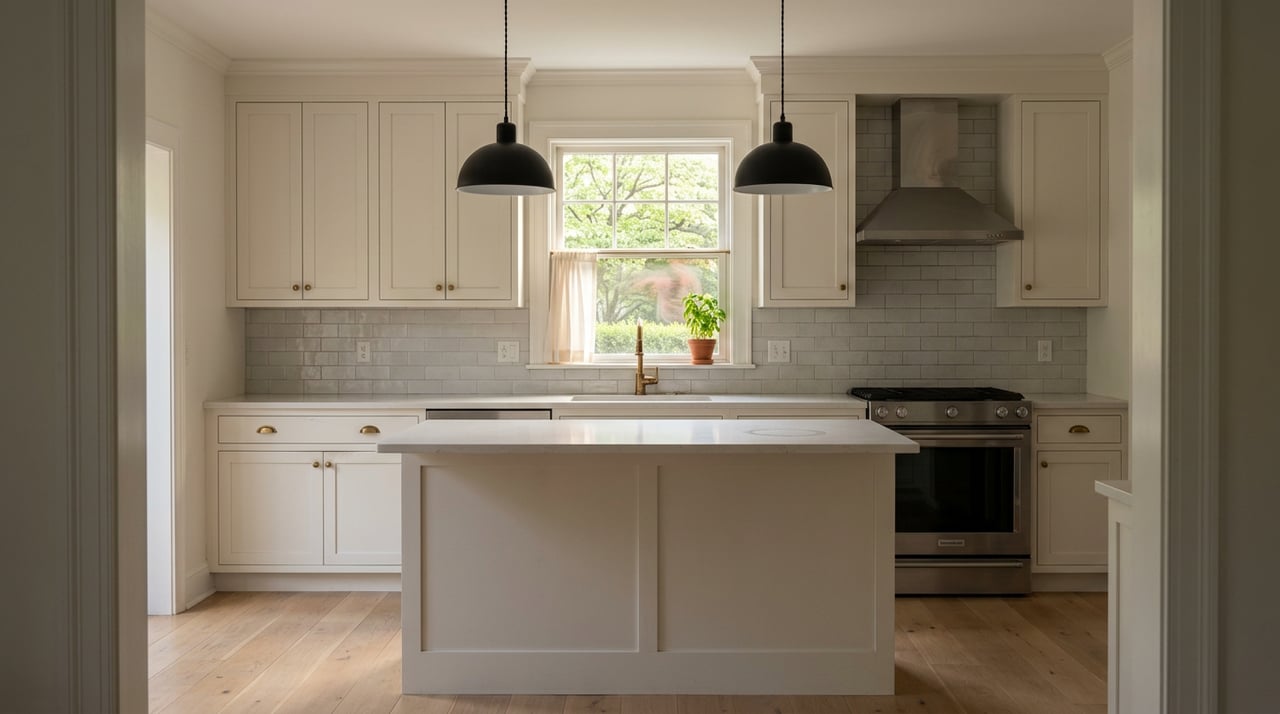
Condition is not just a marketing detail. It is a pricing input. A move-in-ready home with updated systems, strong presentation, and fewer visible issues may support a stronger launch price than a similar home that needs immediate work.
That is one reason pricing and preparation should work together. When buyers feel they can move in with confidence, they often respond faster. And according to Realtor.com’s seller guidance, faster sales can help reduce carrying costs like mortgage payments, utilities, and maintenance.
Separate single-family and condo logic
Not every Amesbury property should follow the same pricing formula. The Massachusetts Association of Realtors reported that by June 2025, Amesbury condos had a year-to-date median sales price of $487,500, while single-family homes were at $677,450. Inventory and pace also differed by property type.
That is why we do not treat the entire city as one bucket. A condo buyer and a single-family buyer often enter the market with different budgets, expectations, and comparison sets. Your pricing strategy should reflect that.
Why micro-location changes value
Not all Amesbury areas compete the same way
Two homes with similar square footage can still command different prices if buyer appeal differs. Amesbury’s housing and planning efforts point to several subareas evolving in distinct ways, including Lower Millyard, the East End, the Golden Triangle, and Rocky Hill.
For example, the city describes Lower Millyard as an older industrial area evolving into a mixed-use expansion near Heritage Park, the Powwow River, the Riverwalk, the Senior Center, and the Costello Transportation Center. The East End Smart Growth Overlay District is also intended to guide mixed-use development and transitions between commercial and residential areas.
These details matter because buyers do notice context. They consider nearby amenities, surrounding development patterns, and how a home fits into the broader area. That does not mean one area is universally better than another. It means pricing should reflect the specific buyer appeal of your location.
Why overpricing can cost you more
Many sellers assume it is safer to start high and negotiate down later. In reality, that strategy can work against you.
Buyers tend to respond most strongly when a home first hits the market. If the price feels right, you are more likely to create urgency, drive showings, and attract stronger offers early. If the price feels off, the listing can lose momentum, and later reductions may raise more questions than excitement.
In Amesbury, where Redfin describes the market as very competitive, early interest matters. Strategic pricing is often less about “pricing low” and more about pricing accurately enough to invite the market to respond quickly and confidently.
Timing still plays a role
National research can also help frame local timing decisions. Realtor.com’s 2026 best time to sell report identified the week of April 12 to 18 as the most favorable national listing window, and noted that spring in high-demand coastal markets like Boston often begins in early to mid-March.
That does not mean every Amesbury seller should list on the same week. It does mean prep should start earlier than many people expect. If 53% of sellers take one month or less to get ready, the best time to plan your pricing and launch strategy is before you feel rushed.
What confidence looks like in practice
A confident price is not an emotional number. It is a market-backed number.
It comes from combining:
- recent closed sales
- active and pending competition
- property type
- condition and presentation
- micro-location inside Amesbury
- current inventory and buyer pace
- timing and launch strategy
When those pieces line up, pricing stops feeling like a gamble. It becomes a strategy designed to protect your net proceeds, reduce time on market, and position your home to stand out for the right reasons.
How we approach pricing at The Barnes Team
At The Barnes Team, we believe sellers deserve more than a rough estimate and a hopeful list price. Our approach is data-driven, local, and tailored to the home in front of us. We study the comps, read the live competition, factor in property-specific strengths, and pair pricing with premium marketing so your home enters the market with a clear plan.
If you are thinking about selling in Amesbury and want a pricing strategy built on local evidence, not guesswork, connect with The Barnes Team. We would be glad to help you understand your home’s position in today’s market and map out the right next step.
FAQs
How is a home price determined in Amesbury?
- A strong Amesbury home price is based on recent closed sales, current competition, property condition, home type, and the specific location within the city.
Why do Amesbury home values look different across websites?
- Different websites use different time frames, formulas, and data sets, so broad market estimates can vary. That is why a local comparative market analysis is more useful than any single online number.
Should I price my Amesbury home higher to leave room to negotiate?
- Not usually. An inflated launch price can reduce early interest, slow showings, and lead to price cuts that hurt momentum.
Does pricing differ for Amesbury condos and single-family homes?
- Yes. Amesbury condo and single-family segments have shown different median prices, inventory levels, and buyer behavior, so each should be priced within its own competitive set.
When is the best time to list a home in Amesbury?
- Spring often brings strong buyer activity in this region, with coastal Massachusetts markets sometimes starting earlier than the national spring peak. The best timing still depends on your home, your preparation, and current competition.